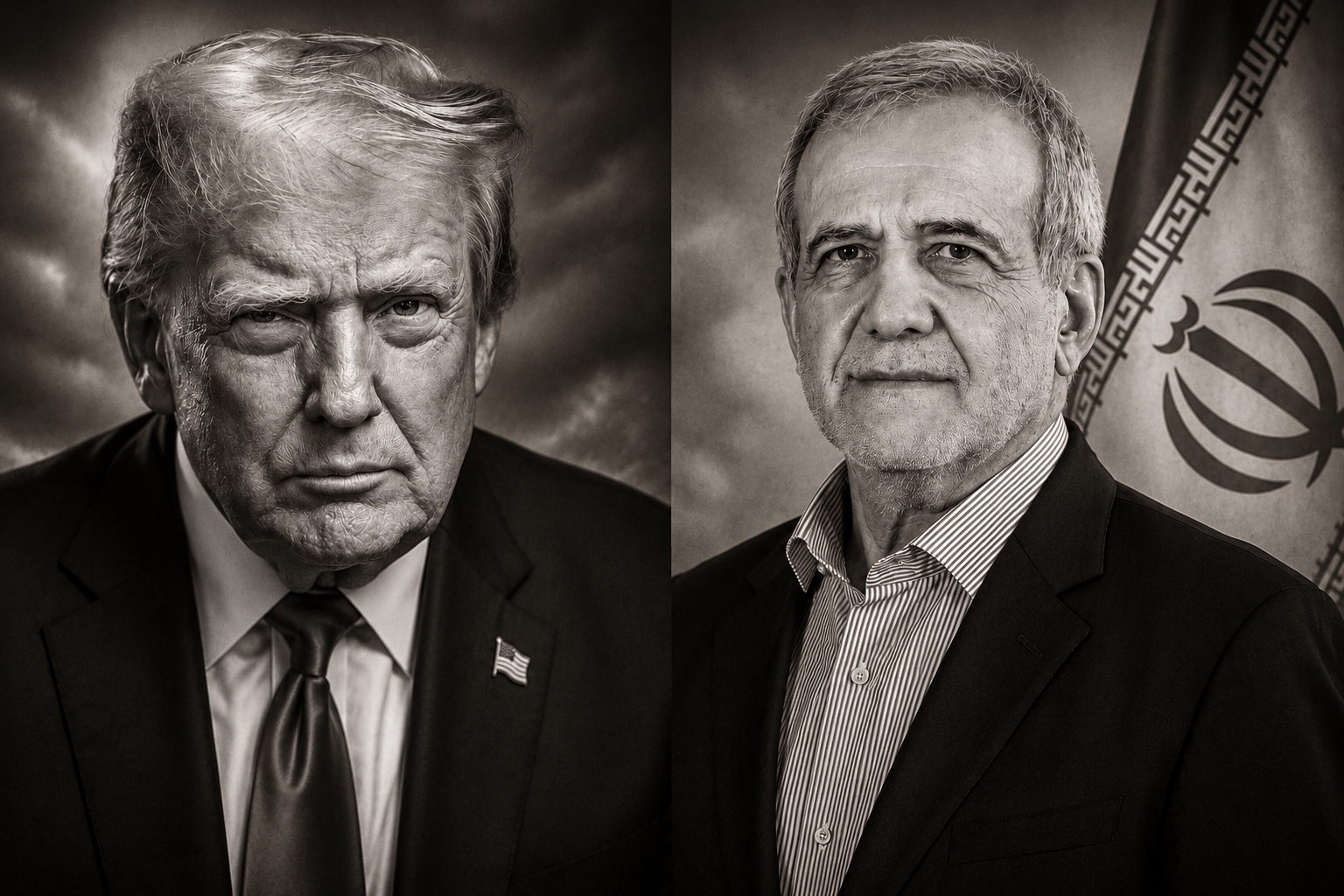
In the dynamics of modern geopolitics, the line between existential hostility and functional symbiosis has rarely been as blurred as in the complex relationship between the United States of America and the Islamic Republic of Iran. In recent years, the world stage has witnessed a cycle of acute crises followed by abrupt periods of calm that invariably reshape the balance not only in the security sphere, but also within the financial flows of the global economy. This pattern of cyclical tension raises fundamental questions about the nature of contemporary conflict. Are we witnessing a classic ideological clash between two irreconcilable doctrines, driven by strategic insecurity and a race for regional supremacy, or is a deeper, unstated mechanism operating behind the curtain of bellicose rhetoric, allowing specific political and economic structures to extract colossal material dividends? Examining both hypotheses reveals the multi-layered architecture of a confrontation where geopolitical interests and market logic intertwine in ways rarely captured by daily headlines.
On one side of the debate lies the undeniable reality of authentic strategic rivalry. For decades, and particularly during the administration of Donald Trump, Washington and the Islamic Revolutionary Guard Corps (IRGC) have been locked in a confrontation marked by real material destruction, casualties, and unpredictable risks. The strategy of „maximum pressure,“ the withdrawal from the 2015 nuclear agreement, and the unprecedented designation of a state military branch as a foreign terrorist organization were not merely symbolic gestures. They represented an aggressive economic blockade designed to paralyze Tehran’s financial arteries and reduce Iranian oil exports to a minimum. In response, Iran activated its regional network of proxy forces, striking oil infrastructure across the Persian Gulf and harassing commercial shipping in critical maritime choke points such as the Strait of Hormuz. The culmination of this standoff was the targeted killing of General Qasem Soleimani—a figure of monumental importance to Iran’s regional power projection. This act pushed the world to the brink of full-scale conventional war, demonstrating that decisions made at the highest levels carry real, life-and-death stakes that hardly fit into conspiracy theories of orchestrated political theater.
Proponents of classic geopolitical analysis argue that the economic damage caused by this conflict far outweighs the short-term gains of any single faction. For the Iranian state, and even for the financial empire of the Revolutionary Guards themselves, American sanctions have triggered massive currency depreciation, a sharp decline in living standards, the loss of international markets, and a total block on technological investment in the energy sector. From the American perspective, an open-ended military commitment in the Middle East requires sustaining a costly military posture and generates perpetual inflationary pressure on global energy markets—a factor that traditionally damages any incumbent administration in Washington ahead of an election. Seen through this lens, the ongoing tension is not a managed rent-seeking game, but a tragic security dilemma where every measure taken by one side to enhance its security is perceived by the other as an existential threat, triggering retaliation and unpredictable escalation.
In parallel, however, an alternative reading of events focuses on the structural advantages generated by a model of „permanent crisis short of total war.“ This perspective does not necessarily require the existence of a secret compact or direct collusion between specific leaders in the style of classic conspiracy narratives. Instead, it draws upon game theory and the concept of tacit collusion, wherein two adversarial parties independently recognize that maintaining controlled tension maximizes their domestic power resources and financial windfalls. In this sense, the cycle of escalating rhetoric followed by calibrated de-escalation functions as an ideal engine of volatility across international commodity markets.
Оставете коментар