TOP SECRET: THE „MADARA“ DOSSIER — THE BLOODY SACRIFICES, SECRET GODS, AND UNDERGROUND LABYRINTHS BEHIND EUROPE’S 75-FOOT CLIFF MONSTER THAT THE HISTORY BOOKS WON’T TELL YOU ABOUT!

TOP SECRET: THE „MADARA“ DOSSIER — THE BLOODY SACRIFICES, SECRET GODS, AND UNDERGROUND LABYRINTHS BEHIND EUROPE’S 75-FOOT CLIFF MONSTER THAT THE HISTORY BOOKS WON’T TELL YOU ABOUT!
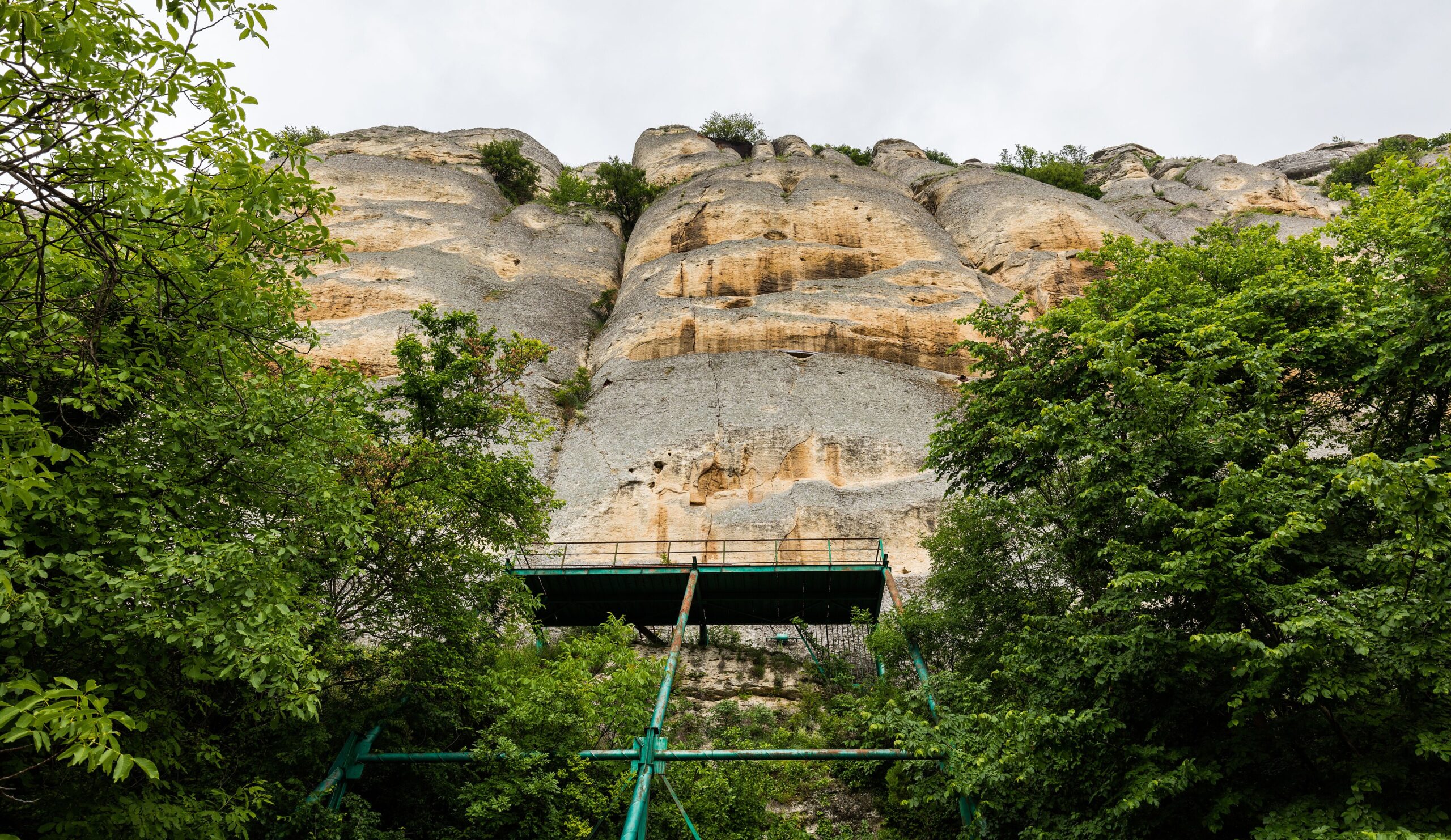
Forget everything you were ever taught in school, wipe the sanitized history lessons from your mind, and brace yourself for a reality that mainstream academia has swept under the rug for decades. Across Southeastern Europe, the iconic silhouette of the Madara Horseman—chiseled into an almost vertical cliff face in northeastern Bulgaria—is revered as a foundational national symbol. Yet almost nobody realizes that behind this imposing monument lies a terrifying abyss of buried secrets, pagan rituals, esoteric mysteries, and explosive scientific battles. The official narrative, repeated ad nauseam, offers a suspiciously neat explanation: it supposedly depicts Khan Tervel or another legendary early medieval ruler celebrating a triumph over vanquished enemies. But behind this polished facade lie questions that the academic elite prefers to ignore, simply because they threaten to tear down the entire mainstream historical consensus. Who is truly suspended 75 feet above the ground, frozen in cold limestone, and why does the surrounding cliff complex pulse with the dark shadows of ancient sacrifices, encrypted runes, and forgotten deities that defy conventional history?

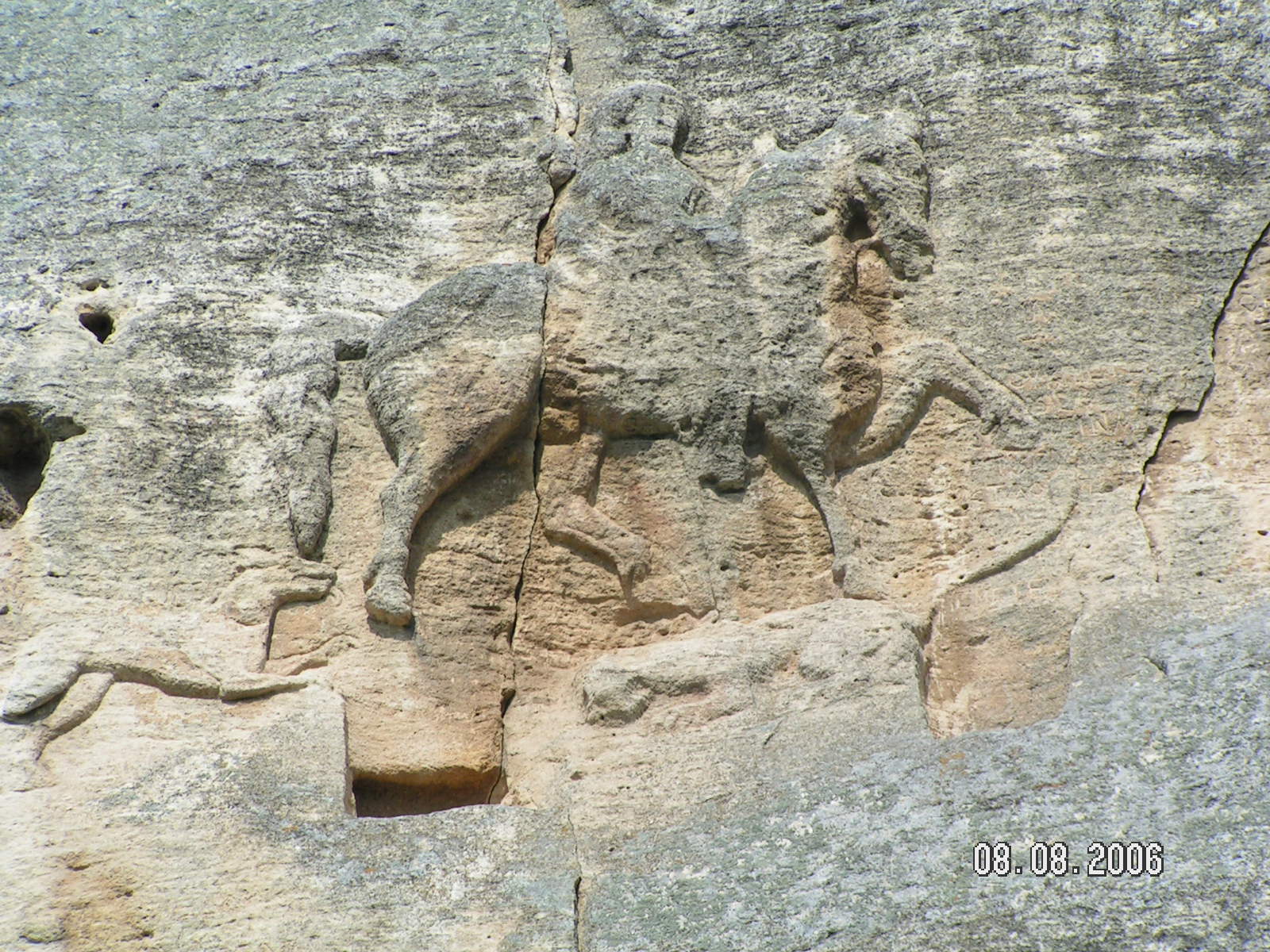
The real investigation begins with the most fundamental question of all: who is actually carved into this monumental rock? The deeper archaeologists dig, the fewer solid answers they find. For generations, scholars have fiercely attacked one another’s hypotheses, each study dismantling the previous one. One camp insists the relief was created in the early 8th century to immortalize Tervel at the pinnacle of his power in 705 AD—the fateful year he restored the Byzantine emperor to the throne in Constantinople, earned the title of Caesar, and turned the cliff into a massive stone manifesto of imperial authority. Others argue the figure represents Asparuh, the founder of the realm, while a third faction staunchly maintains it honors the fierce Khan Krum or the great builder Omurtag. Yet the real shockwave is only beginning. A growing number of unconventional researchers suggest the rider might not be a mortal human being at all, but an immortal god carved into the precipice to guard a portal between realms. A close examination reveals traces of what appears to be a halo encircling the rider’s head, instantly elevating the figure from an earthly monarch to a deified celestial warrior.

If this is not a mortal king, which ancient god is watching over the plains? Here, the theories take a dramatic turn. The most convenient explanation points toward Tangra, the supreme celestial deity of the early steppe warriors, bolstered by nearby inscriptions from Omurtag’s reign that explicitly invoke the god’s name. But seasoned investigators know that barely scratches the surface. International researchers dropped an academic bombshell by drawing direct parallels to the ancient Iranian solar cult of Mithra and the monumental Sasanian rock reliefs of ancient Persia. There is even a radical hypothesis suggesting the carving is vastly older, possibly depicting the Persian emperor Darius the Great himself, who marched his armies across these very lands in deep antiquity. What would an ancient Persian royal icon be doing in the heart of the Balkans, and is it possible that medieval steppe rulers simply found an ancient, pre-existing monument and carved their own Greek inscriptions around it to claim its divine power for themselves? This possibility unnerves historians because it completely demolishes the accepted timeline.

Digging further back into antiquity reveals yet another layer: the Thracian riddle. The Balkan peninsula is scattered with thousands of small votive plaques dedicated to the Thracian Horseman, known as Heros. Early pioneering archaeologists wondered whether the Madara relief was simply a colossal, megalithic continuation of this deeply rooted Thracian cult. Other theories link the imagery to local deities like Darzalas or the fierce hunting goddess Bendis. Yet the iconography contains perplexing anomalies that defy easy categorization. Beneath the horse’s hooves lies a pierced lion, behind the steed bounds a hunting dog, and faint traces before the rider’s face suggest a mysterious bird—interpreted by some as a hunting falcon and by others as a sacred eagle. The dying lion is far more than mere game. Does it represent the crushed Byzantine Empire, a defeated earthly rival, or primordial chaos subdued by a divine champion? Every chisel mark screams that this site was designed for something far grander than a simple commemorative portrait.

The true challenge to conventional doctrine lies at the foot of the cliff, where casual tourists rarely look. The Madara Horseman never existed in a vacuum; it was the crowning jewel of a colossal, enigmatic sacred complex. Directly beneath the relief, excavations revealed an extensive pagan sanctuary centered around a massive stone altar. Carved into its surface are deep runoff channels engineered for one unmistakable purpose: the rapid drainage of warm blood from sacrificial animals, and, according to darker speculative lore, ancient ritual sacrifices dedicated to underworld gods and deceased royal ancestors. The area surrounding the smaller rock chambers is covered with enigmatic markings—often termed pseudo-runes—which linguists still struggle to decipher, debating whether they represent secret steppe formulas, fertility talismans, or incantations to communicate with the spirit realm.

The natural landscape itself radiates a raw, primordial mysticism that drew priests and shamans for millennia. The Great Cave, celebrated since classical antiquity as the Cave of the Three Nymphs, served as a Thracian and Roman water sanctuary long before medieval rulers claimed the plateau. Water dripping from the rock vaults, subterranean chambers reaching deep into the earth, and sheer cliff walls soaring into the sky made Madara an ideal crossroads between worlds. Here, successive civilizations built atop the sacred foundations of their predecessors. Thracians venerated their water spirits, Romans erected villas and temples, and early medieval monarchs transformed the cliff into a dynastic sanctuary, engraving their supreme hero directly above ancient altars.

This points to a compelling conclusion: the monument was never executed in a single moment by a single sculptor. Madara was a living, evolving palimpsest. The primary relief may have been modified over time, with the dog, the lion, and layered Greek inscriptions added across generations by successive rulers like Tervel, Kormesiy, and Omurtag to reshape history to their political advantage. This also explains the apparent paradox of early medieval rulers using the language of their bitterest rival, the Byzantine Empire. Greek was the international lingua franca of diplomacy, warfare, and statecraft; the cliff at Madara functioned as an unmissable international billboard carved in stone, designed to strike awe and dread into foreign emissaries.

Local folklore preserves its own parallel memories of the site. A persistent regional legend tells of a Latin king or foreign warlord who plunged off the edge of the plateau during a violent hunt, prompting his followers to immortalize his tragic fall on the rock face where he met his end. Even the etymology of „Madara“ remains debated—ranging from the Greek term for a bare, barren cliff to ancient meanings signifying a holy, sacred rock.

Why go through the monumental effort of carving this scene 75 feet in the air onto a sheer, treacherous precipice? In an era without modern machinery, constructing massive wooden scaffolding and spending months suspended over the void cost immense wealth and likely the lives of numerous craftsmen. Nobody expended such staggering resources on casual decoration. This figure was designed to dominate the entire horizon, visible from miles away across the plains, demonstrating to all who approached that the ruler’s authority was ordained by the cosmos itself.

The truth about the Madara Horseman is far grander, stranger, and more multifaceted than the simplistic stories in introductory textbooks. It is not merely a regional symbol of victory, but a multi-millennial crossroads where steppe shamans, Thracian mystics, Persian royal traditions, and brutal early medieval geopolitics collided. Madara is a stone chronicle of a forgotten world written in blood, devotion, and unbridled ambition for immortality—a timeless enigma whose deeper secrets are only now beginning to resurface.

THE GREAT TEMPORAL CONSPIRACY: WHAT SECRETS LIE WITHIN THE SUBTERRANEAN LABYRINTHS BENEATH THE ROCK?

The more light researchers attempt to shed on this giant rock silhouette, the darker the shadows that emerge from the depths of the Shumen plateau. Hidden behind formal academic monographs lies a rarely discussed reality: the entire region surrounding the Madara Horseman is honeycombed with natural karst caverns, subterranean galleries, and hidden tunnels that have fueled centuries of local folklore. Persistent legends speak of concealed dynastic treasuries, hidden vaults where high priests guarded sacred state relics away from invading forces, and secret passages running straight toward the earliest medieval capital of Pliska. Anomalistic researchers have even suggested that the geological fault line acts as a powerful geomagnetic focus, arguing that the site was deliberately chosen due to ancient knowledge of telluric earth currents known to pre-Roman cultures. Remarkably, the cliff face has withstood severe regional earthquakes over the centuries, preserving the relief intact while stone fortresses and palaces across the plains crumbled to dust.

Even more provocative is the question of what was deliberately erased from the monument over the passage of time. While modern scholars debate the presence of a bird, a halo, or a stirrup, few address the visible traces of physical recarving across the rock face. As dynasties shifted and old pagan rites gave way to new imperial faiths, were sacred attributes chiseled away to sanitize the monument’s original esoteric intent? Forensic archaeological analysis indicates that the cliff endured not only environmental erosion, but intentional re-cutting designed to adapt an ancient sacred image into a politically convenient manifesto for a new era. The layered imagery of the speared lion and the leaping hound reveals a complex stone montage assembled across centuries. Madara remains not merely a passive relic of the past, but an active historical cipher—one that resists tidy explanations and continues to captivate anyone daring enough to gaze up at those 75 feet of ancient stone with open eyes.

Оставете коментар

Вашият имейл адрес няма да бъде публикуван.