ALIEN TOMB IN BULGARIA? BIZARRE „DRAGON“ ROCK IN THE BALKANS SPARKS GLOBAL SHOCK OVER ANCIENT COSMIC SARCOPHAGUS
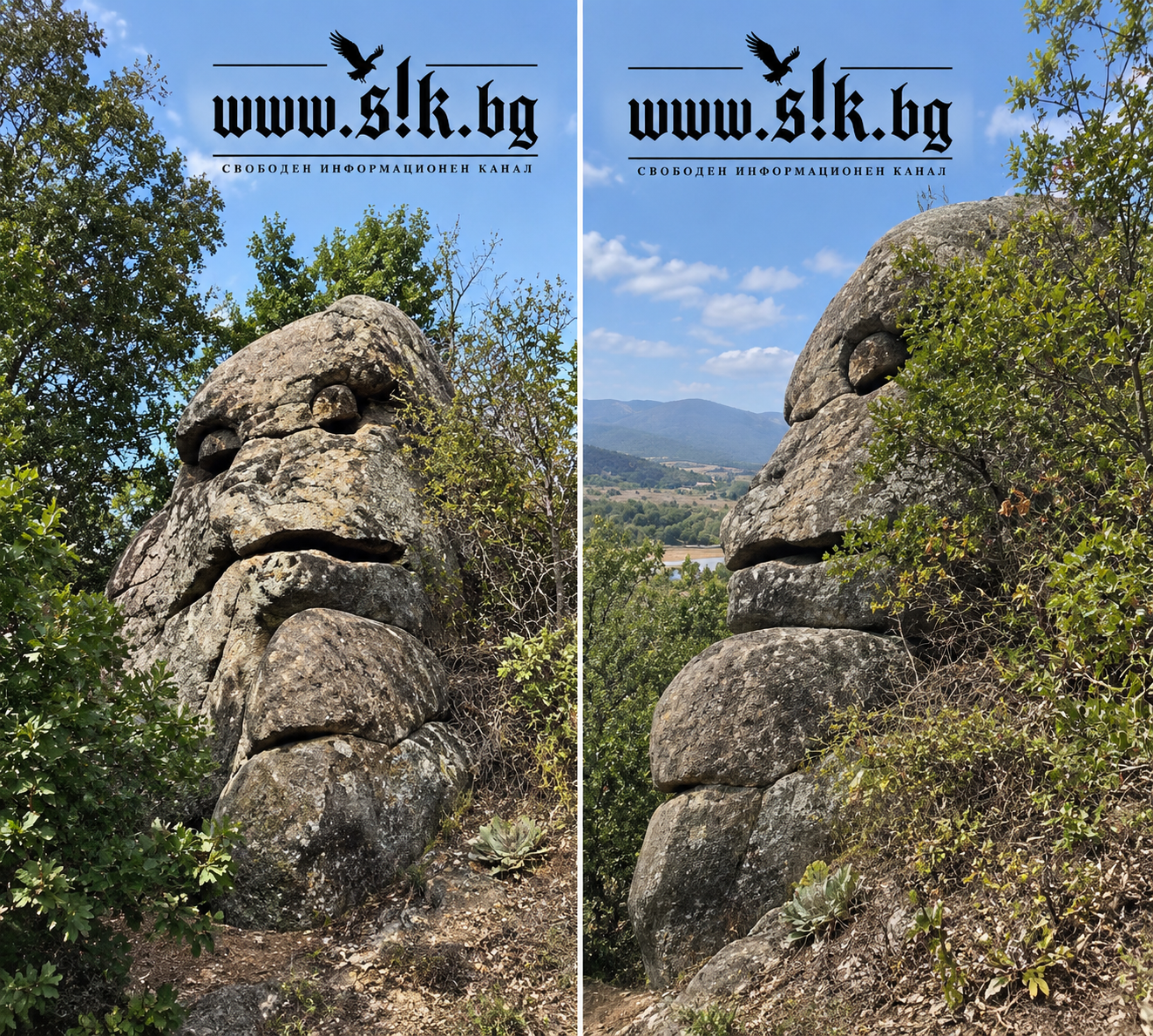

ALIEN TOMB IN BULGARIA? BIZARRE „DRAGON“ ROCK IN THE BALKANS SPARKS GLOBAL SHOCK OVER ANCIENT COSMIC SARCOPHAGUS
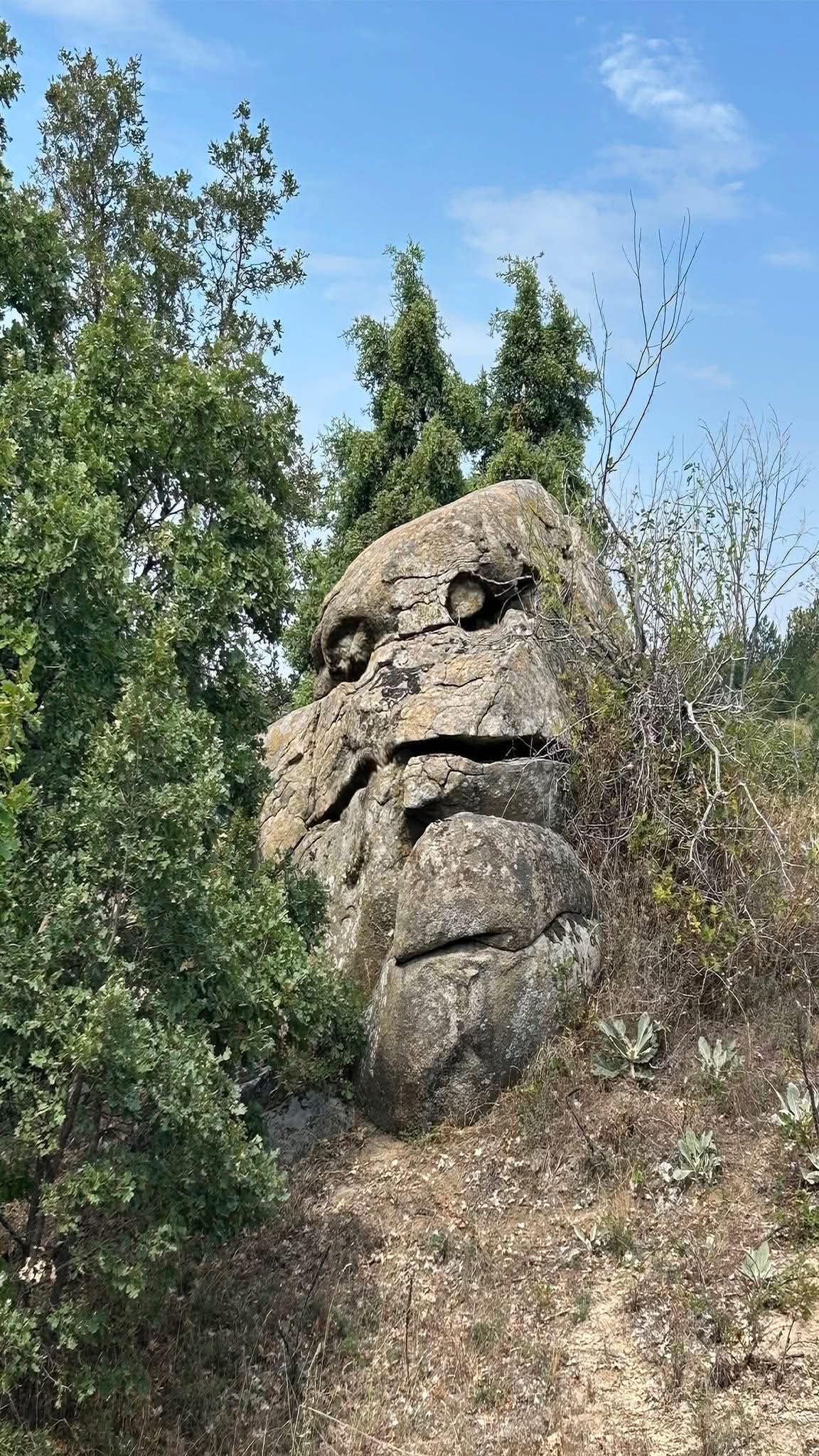
THE MYSTERIOUS DRAGON OF STARA KRESNA: WHY THE CENTURIES-OLD ROCK PHENOMENON IN THE GORGE SPARKS FANTASIES OF ANCIENT CIVILIZATIONS AND ALIEN TOMBS

The Kresna Gorge has always possessed a peculiar, almost magnetic aura, where the turbulent waters of the Struma River have carved through rock massifs for millennia, leaving behind a landscape of rugged crags, deep shadows, and hidden trails. Recently, a photograph from the area around Stara Kresna circulated across social networks and amateur forums, triggering a surge of conjecture, speculation, and outright fantastic theories. The image reveals a massive rock formation whose contours bear an uncanny resemblance to the profile of a giant creature—a silhouette with a pronounced eye socket, a prominent snout, and a deep fissure creating the impression of an open jaw. In public discussions, the resonant moniker „The Dragon“ quickly took hold, bringing with it a wave of extravagant assertions. The most extreme rumor, seized upon by conspiracy enthusiasts, went so far as to label the formation a sealed „tomb of an extraterrestrial entity“ or a prehistoric monument left behind by an otherworldly race. Yet before imagination eclipses reality, it is essential to examine this case with a cool head, weighing verifiable facts, natural phenomena, and authentic regional folklore.

The human mind has an innate propensity to detect familiar forms amidst nature’s chaos—a psychological tendency well recognized by science as pareidolia. When sunlight strikes a fractured granite or sandstone formation at a particular angle, shadows naturally cast contours that our perception easily reinterprets as a human face, an animal figure, or a mythological beast. For geologists, such formations are hardly unexpected; they are the cumulative result of millions of years of weathering, tectonic shifts, and temperature extremes that split bedrock along natural lines of mechanical weakness. In this specific case near Stara Kresna, there is no direct evidence of quarrying, chisel marks, or deliberate stone-dressing that would classify it as a prehistoric sculpture. Validating it as a megalithic monument or a cult installation demands rigorous field assessments by archaeologists and geomorphologists to analyze the stone’s structural integrity and screen for associated artifacts.

Nonetheless, it is entirely understandable why the hypothesis of „extraterrestrial origin“ or the ancient resting place of a cosmic traveler generates such fascination within certain circles. Similar sensational narratives have long clustered around atypical geological features across Bulgaria—one need only recall the enduring mysteries of Tsarichina or Belintash, where documented history frequently blended with speculative accounts of subterranean chambers and contact with non-human intelligences. Ascribing off-world roots to the cliff near Kresna is a modern myth driven by sensationalism, yet beneath it lies a tangible, profoundly ancient cultural framework. Stara Kresna—the authentic historical settlement that preceded the modern town—possesses a heritage spanning Thracian antiquity, the Roman era, and the Middle Ages. Archaeological surveys in its immediate environs document traces of ancient habitation, Roman road alignments, and numerous historic shrines reflecting uninterrupted human presence over thousands of years.

Balkan folklore is no less vivid than contemporary science fiction when addressing anomalies in the landscape. In the traditional beliefs of the Pirin region, the dragon (zmey) occupies a central position—not merely as a destructive monster, but as an elemental sovereign commanding storms, subterranean springs, and mountain caverns. For generations, local populations connected unusual stone formations to remnants of primordial giants, cataclysms between supernatural forces, or petrified guardians watching over concealed treasures. Conferring metaphorical names upon prominent crags—such as Momina Skala (Maiden’s Rock), Aramiyska Skala (Outlaw’s Rock), or Zăbna Skala (Tooth Rock)—is a living toponymic tradition in the Kresna Gorge, reflecting an endeavor to humanize the untamed wilderness. Consequently, if this formation is indeed known among locals as „The Dragon,“ it represents a classic microtoponym inspired by natural aesthetic resemblance rather than a literal prehistoric burial vault.

Untangling such enigmas demands a precise division among three distinct dimensions: geological reality, authentic folklore, and modern sensational reinterpretations. While claims of alien sarcophagi remain firmly within the realm of contemporary internet mythmaking, the truly substantive work lies on the ground. Deciphering the true significance of the rock „Dragon“ requires accurate spatial mapping, archival scrutiny, and the systematic collection of oral testimonies from the eldest residents of Stara Kresna. Only through this disciplined approach can one discern whether this feature is merely an extraordinary trick of erosion giving rise to urban legends, or a site guarding a forgotten memory from the authentic historical past of this unique region.

THE CIPHER BENEATH THE STONE MASK: DOES A WALLED SECRET LIE BEHIND THE HYPOTHESIS OF A COSMIC SARCOPHAGUS OVERLOOKING THE STRUMA RIVER?

Whenever sensational rumors spread unchecked, the boundary between physical fact, metaphor, and outright fiction rapidly dissolves. Speculation concerning the unusual stone profile overlooking Stara Kresna has intensified to the point where select circles speak not simply of a natural landmark or a pagan sanctuary, but of a hermetically sealed capsule or the tomb of an otherworldly traveler buried deep within the mountain’s strata. Proponents of this notion point to the geometry of the fractures and the rock’s sharp angularity as supposed proof that a hidden cavity was deliberately sealed to conceal something foreign to terrestrial biology. Narratives of this sort hold deep psychological appeal: they merge humanity’s enduring fascination with ancient mysteries with contemporary mythologies of stellar visitors and paleocontact. Within Bulgaria, this is far from unprecedented; for decades, virtually any secluded or striking outcrop in the Rhodopes, Strandzha, or Pirin has risked being branded an interdimensional portal or the crypt of prehistoric titans.

Examined through the lens of empirical science, however, the rock formation presents a different, yet equally compelling narrative. The geological evolution of the Kresna Gorge has been driven by immense tectonic forces, fault lines, and persistent wind and water erosion that have sculpted remarkably expressive stone forms. The region’s granitic and metamorphic formations fracture along predictable structural planes, producing planar slabs, horizontal fissures, and shadowed recesses that under specific lighting can easily appear artificially worked. The illusion of symmetry and deliberate architectural design is amplified when an observer isolates the shape from its broader geological environment, unconsciously seeking validation for a preconceived idea. Science has repeatedly demonstrated that dynamic Earth processes can fashion structures that vividly emulate human visages, animal silhouettes, or architectural ruins without requiring supernatural or cosmic intervention.

Even so, summarily dismissing the mystique surrounding the area would be shortsighted, as modern folklore frequently anchors itself to actual historic memory that has merely shifted form across generations. The terrain encompassing Stara Kresna is dense with archaeological strata—from prehistoric settlements and ancient fortifications to forgotten mining shafts that an untrained eye might readily mistake for secret entrances to subterranean worlds. In centuries past, local communities viewed deep chasms and rock clefts as the dwellings of elemental spirits, consecrating prominent monoliths as shrines or using them as vital waypoints along caravan trails. When the memory of a specific ritual or historical episode fades, the resulting vacuum is quickly occupied by newer folklore; in our contemporary era, the roles once held by archaic deities, titans, and dragons are frequently inherited by narratives of extraterrestrial contact.

The genuine investigative question here is not whether an alien intelligence lies entombed beneath the stone, but why this particular landscape continues to generate such persistent mystical traditions. The severe topography of the Kresna Gorge, coupled with its strategic importance through the ages, makes it a natural stage for folklore balanced between awe of the unknown and respect for nature’s raw power. Until systematic geological measurements and extensive ethnographical research are conducted on-site, the „Dragon“ of Stara Kresna will remain at the intersection of empirical science and imaginative speculation, drawing both inquisitive travelers and mystery enthusiasts determined to decipher the riddle of the stone.

Оставете коментар

Вашият имейл адрес няма да бъде публикуван.