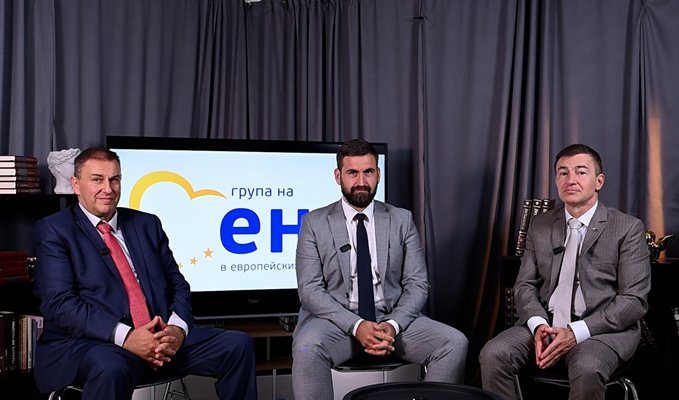
In contemporary Bulgarian politics, success has long ceased to be measured by built highways, completed reforms, or genuinely defended national interests in Brussels. Instead, it is manufactured on an industrial scale by PR experts whose primary task is to transform a routine political wish into a booming media headline. A classic example of this mechanism of political alchemy is the latest campaign by GERB Members of the European Parliament Andrey Novakov, Andrey Kovachev, and Emil Radev, widely trumpeted across the pages of national media. The plot appears grand: a battle for an additional 2 billion euros for Bulgaria, lightning-fast solutions to protect children on social media, and stringent measures against illegal arms trafficking. Yet, when one strips away the packaging of hollow slogans and delves into dry European documents, procedural rules, and official timelines, the bitter truth is exposed. What lies before us is not a statesmanlike breakthrough, but yet another well-oiled pre-election vacuum cleaner for public attention, built upon floating figures, unfulfilled promises, and legislative mirages.
To understand the scale of this illusion, we must first trace the metamorphosis of a single statement. On September 16, Andrey Novakov modestly declared to the media that he was fighting to increase Bulgaria’s projected budget in the next multiannual financial framework for the 2028–2034 period from approximately 22 billion to 24 billion euros. Just a few days later, in late September, this internal party aspiration transformed into a categorical media assertion, thrust directly into headlines as a flat fact: „Two billion more for Bulgaria from the EU.“ Herein lies the core defect of native political journalism and its protagonists. Between the negotiating position of a single MEP or group of MEPs and actually secured funding, the chasm is as deep as the national budget. In Brussels, nobody hands out billions simply because a Bulgarian politician has given a passionate interview or posed in front of the European flag. The future financial framework is subject to grueling, exhausting bargains among all member states, requiring unanimity in the Council of the European Union and the consent of the European Parliament. An MEP may table proposals, lobby in the corridors, and make statements for the domestic audience, but they possess neither the mandate nor the power to single-handedly guarantee or secure even a single cent of national funding. Transforming „we will fight for negotiations“ into „we are getting billions“ is a classic substitution of concepts designed to create a false sense of administrative stability and Euro-Atlantic success where there is only a procedural embryo.
No less troubling is the actual mathematics behind these booming figures, which disintegrates entirely upon deeper analysis. In April of the same year, the exact same politician claimed in official statements that the country had the potential for nearly a 20% increase in certain funds, which again equated to the exact same magical 2 billion euros. However, when the baseline shifted in September from 22 to 24 billion euros, that increase suddenly shrank to roughly 9.1%. This ten-point discrepancy within a matter of months is not merely a minor accounting error, but a symptom of fluid rhetoric where figures are adjusted to suit the immediate needs of a PR campaign. Exactly which funds are included in these calculations? Which portion is guaranteed, and which depends on national co-financing and execution? There are no answers to these questions because in the world of political marketing, details only ruin the narrative. Even more ironic is the emphasized need for more money against the backdrop of Bulgaria’s chronic problem with absorbing already allocated EU funds. Official European reports regularly point to delays on the ground, administrative capacity bottlenecks, and the risk of losing funds due to unfulfilled reforms or delayed projects. Demanding more money before proving that one can effectively utilize existing allocations is akin to haggling for a luxury car while your garage is full of rusted, unusable vehicles.
The exact same simulation of activity is observed in the realm of social policy and security, where other figures from the same political group—Andrey Kovachev and Emil Radev—were cast as the authors of sweeping European reforms. The topics in question involve the initiative for child protection on the internet and new measures against illicit arms trafficking. The political PR machine rushed to frame these themes as a personal triumph for domestic MEPs, conveniently forgetting to mention a fundamental fact: at the time of these booming headlines, these remain mere proposals by the European Commission or advanced legislative procedures, by no means definitively adopted European laws or directives. The proposal for the so-called „EU KIDS Act,“ which envisions restrictions on profiles for children under 13 and mandatory parental controls for teenagers up to 15, is an extraordinarily complex regulation that has yet to pass through lengthy debates, compromises, and votes in the European Parliament and the Council. Attributing these texts to the merits of specific Bulgarian representatives is a cheap attempt to ride the wave of public anxiety regarding the impact of social media on minors. When examining the details of these measures—such as mandatory age verification without identity disclosure or exceptions for video platforms—it becomes clear that behind generic phrases about „fighting algorithms“ lie technical challenges for which Bulgarian MEPs have offered not a single workable mechanism applicable on domestic ground.
The scenario is similar with the amendments against illegal weapons, where Emil Radev’s name was slotted into the general choir of Europe’s saviors. However, documents from official European Parliament registers reveal a completely different reality. The rapporteurs on the dossier are entirely different MEPs, and the tabled amendments are part of the routine work of hundreds of parliamentary aides and political groups. To claim that a Bulgarian representative single-handedly reshaped European legislation against arms trafficking, when dealing with standardized texts on penalties, coordination units, and information exchange via Europol, is an insult to the reader’s intelligence. Even more absurd is the tossing into the public sphere of staggering sums of billions in organized crime profits or unverified claims of mass anti-tank missile trafficking in Europe without citing specific European reports, police investigations, or national data for Bulgaria. This is neither investigative journalism nor an informed political debate, but pure informational noise created to deflect attention from the lack of real results regarding local regional problems that these individuals supposedly represent.
When we gather all these pieces of the mosaic, the foreground reveals a sad and hopeless picture of the Bulgarian political representative in Brussels. This is the image of a figure living in a parallel reality—a world of glamorous press conferences, pre-packaged headlines in tabloids and semi-dependent media, and the constant use of the future tense. In this world, nothing has happened, but everything „will happen.“ Funds have not yet been disbursed, but they „will arrive.“ Laws have not been voted on, but they „will protect the children.“ Behind this rhetorical wall, however, lies nothing other than political emptiness. The true problem with such PR stunts is not merely that they mislead voters with fake news or half-truths; more dangerously, they erode trust in the European institutions themselves and in the democratic process at large. When citizens witness yet another booming article about billions that never reach their actual problems and bans that exist only on paper, they lose faith in politics. Therefore, the real question for Andrey Novakov, Andrey Kovachev, Emil Radev, and the media outlets that obediently circulate their press releases is not how much money they have requested or how many laws they have discussed. The question is when they will stop selling illusions to a nation long exhausted by empty words and false saviors. It is time to sober up and stop paying the price of this exorbitantly expensive political hypocrisy.
Оставете коментар