
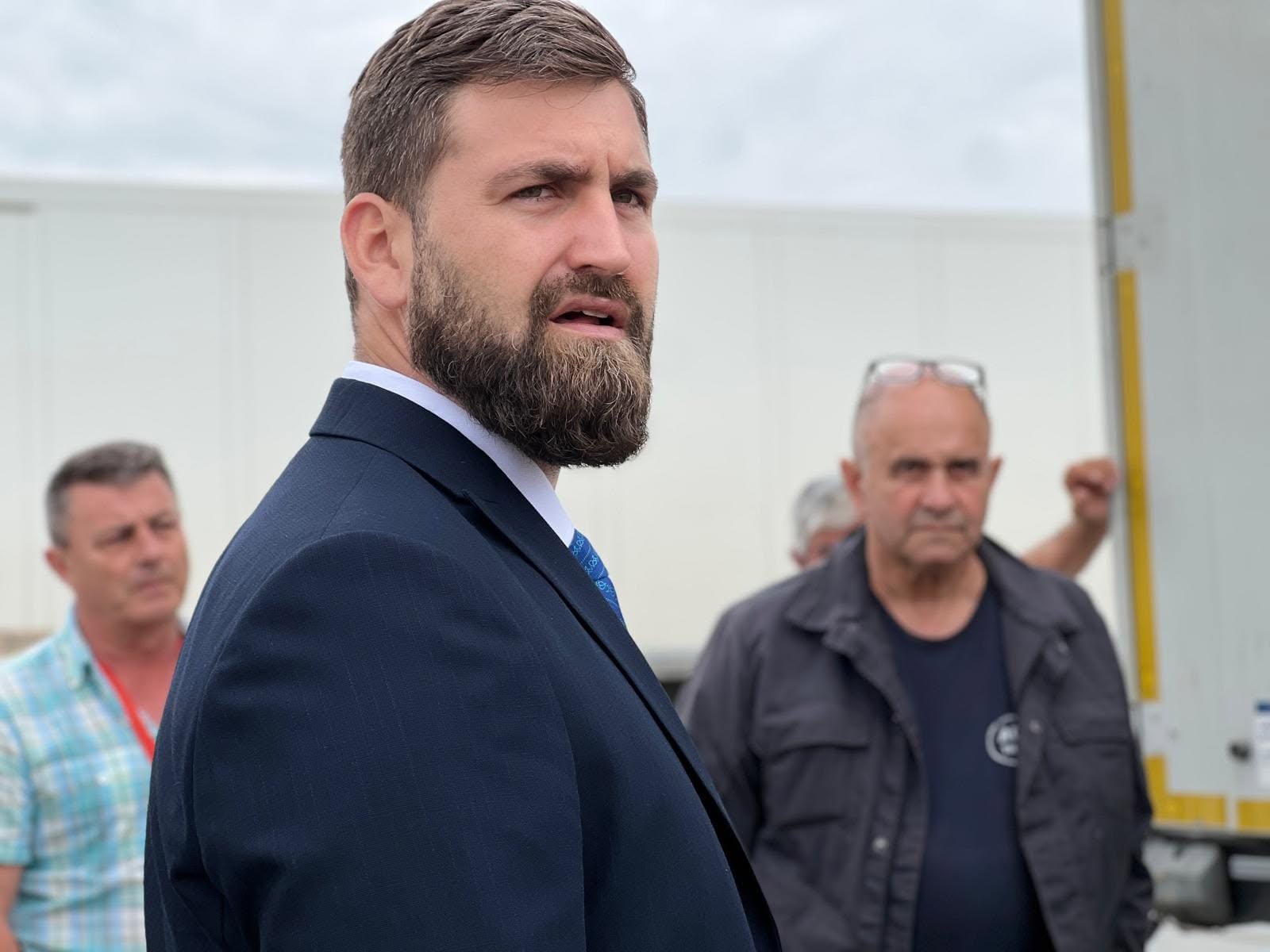
When political marketing collides with mathematics and Brussels’ institutional paper trail, the outcome is rarely flattering for the protagonist. Andrey Novakov has spent nearly twelve years wandering the corridors of the European Parliament, carefully cultivating the image of an indispensable technocrat whose hands manage hundreds of billions of euros in cohesion funds, transport policy, and regional development. For the average voter in Blagoevgrad or Sofia, the underlying suggestion is straightforward: every single euro entering Bulgaria from Europe somehow owes its existence to his signature. Yet, the investigation conducted by The Free Information Channel reveals a vastly different, far more inconvenient reality—one defined by institutional impotence, hijacked achievements, delayed reactions, and a glaring divide between polished public relations and tangible results.
This fundamental deception begins with the way Novakov frames his legislative involvement. It is a matter of public record that parliamentary registries list him as a rapporteur and co-rapporteur on high-profile files, such as the Common Provisions Regulation for the 2021–2027 programming period and the 47.5-billion-euro REACT-EU recovery package. The core problem lies in his public narrative, which systematically transforms the role of a legislative broker into that of a generous benefactor. Within the European Union’s institutional framework, a parliamentary rapporteur is tasked with negotiating compromises between political factions and brokering deals with member states in the Council, not generating the money. Pandemic recovery packages and structural funds are the product of the Union’s collective budget and NextGenerationEU debt instruments, negotiated and approved by heads of state and government. Claiming or implying that an individual Bulgarian MEP single-handedly secured these tens of billions is standard political disinformation. It represents a cosmetic facade that conceals a chronic refusal to examine the finer legislative details and determine what genuinely serves Bulgaria’s national interest versus what merely expands Brussels’ bureaucracy.
The true policy paradox emerges in the field Novakov considers his primary area of expertise: European cohesion. For more than a decade, he has served on the Committee on Regional Development, drafting rules, voting on cohesion assessment reports, and outlining strategies to bridge regional inequalities. However, the situation on the ground in Bulgaria thoroughly dismantles these claims. After ten years of Novakov’s legislative work in Brussels, the economic disparity between Sofia and the rest of the country has not narrowed; it has widened into a chasm. Northern Bulgaria remains cut off, while regions in the Northwest and Southwest continue to endure demographic collapse, poor infrastructure, and stark income disparities. This raises unavoidable questions about personal and partisan accountability that demand a clear acknowledgement of failure. If the rules Novakov crafts and champions in Brussels are flawless, then the funds have clearly been squandered and compromised domestically by Bulgarian authorities, including his own political party. Conversely, if domestic implementation is bogged down by convoluted, dysfunctional, and ineffective European mechanisms, it proves that the lawmaker in the European Parliament helped construct an inadequate legal framework. One cannot claim sole credit for securing European billions while deflecting blame to local authorities when those same billions fail to deliver sustainable economic growth.
Rather than relying on empty promises of more cohesion funding, a sound administrative approach requires a complete overhaul of how European regulations are designed. What is needed is an agile, results-based methodology that lifts the heavy administrative burden from smaller municipalities and links cohesion payments directly to tangible growth in regional GDP per capita, rather than the mere bureaucratic absorption of funds through questionable projects. Instead of drafting reports that simply document existing disparities, an accountable MEP should fight for automated financial incentives for the poorest regions and a radical streamlining of application procedures for local small businesses, rather than enabling the consolidation of funding in the hands of a few dominant national players.
 The most glaring example of substituting real action with superficial posturing remains the case of the Struma Motorway—the project carrying the highest public and economic stakes for his home constituency of Blagoevgrad. In November 2024, Novakov ostentatiously submitted a priority parliamentary question to the European Commission regarding the completion of the section through the Kresna Gorge. In party press releases, this inquiry was framed as a major breakthrough and a decisive battle for Southwestern Bulgaria. In reality, a parliamentary question is nothing more than a routine bureaucratic inquiry that obliges the European Commission to provide a formal written reply, without carrying any legal weight for funding, permits, or actual construction. As years slip by, this dangerous bottleneck continues to claim lives, transit traffic to Greece remains severely constrained, and the MEP’s contribution is reduced to a one-off letter utilized primarily for domestic political consumption. This is simulated activity designed to bypass the hard work of building an effective operational bridge between European institutions, funding instruments, and national authorities to resolve environmental and planning deadlocks.
A genuine solution for the Struma Motorway does not lie in sending letters to the Commission, but in establishing a permanent joint mechanism for accelerated technical and environmental coordination between Brussels and Sofia under the direct supervision of the European Directorates-General for Transport and the Environment. Such a framework would provide independent oversight, safeguard European ecological standards upfront, and protect funding streams, rather than leaving the project stranded in endless litigation and political maneuvering.
This tendency toward reactive posturing and after-the-fact declarations is equally evident in his handling of transport issues, particularly regarding international road hauliers. In December 2024, Novakov raised the issue of a severe shortage of Smart Tachograph Version 2 units and the imminent risk of operational gridlock for international haulage. Yet, this intervention came on the very eve of the implementation deadline, long after the industry had sounded the alarm and supply chains had become hopelessly backlogged. This represents an unmistakable administrative misstep—a reactive move aimed at deflecting blame and feigning solidarity with the sector, rather than addressing the problem proactively through timely legislative amendments to extend deadlines while the regulations were being drafted.
A similar superficiality characterizes his oversight activities. In April 2026, Novakov submitted questions to both the Commission and the Council regarding the collapsed selection procedure for a Bulgarian European Prosecutor. Instead of directing scrutiny toward systemic flaws within the domestic nomination process overseen by the Supreme Judicial Council and the executive branch in Sofia, he shifted the problem entirely to European institutions. This serves as an attempt to evade political responsibility, using the institutional stature of the European Parliament to obscure the failures of Bulgaria’s domestic judicial establishment.
Equally concerning is the shift in his geopolitical positioning during the current parliamentary term. His appointment to the Committee on Security and Defence, alongside frequent meetings with major defense corporations such as Rolls-Royce, Kongsberg Defence & Aerospace, and prominent Bulgarian manufacturers, raises serious questions regarding transparency and lobbying practices. While Novakov publicly discusses European security, findings by The Free Information Channel point to the urgent need for a thorough audit of his legislative amendments concerning the European Defence Industry Programme (EDIP). The public deserves to know which meetings with private corporations resulted in specific legal provisions within European regulations, and whether this legislation genuinely serves the common European interest or targeted industrial agendas. This dynamic is further complicated by his concurrent membership in the Delegation for Relations with the People’s Republic of China, which clashes with the broader European strategy of de-risking economic and technological dependencies on Beijing. To maintain genuine integrity, defense policy must remain anchored in national and European sovereignty through total legislative transparency and the prioritization of integrated military mobility across NATO’s eastern flank, rather than closed-door meetings with corporate representatives.
The sole legislative milestone Novakov can point to with concrete legal outcomes is the passenger rights reform finalized in the summer of 2026. Preserving financial compensation thresholds and guaranteeing adjacent seating for families with children represent clear social protections. However, an unsparing economic assessment exposes the unintended consequences of this legislation: the absence of a thorough impact assessment on final ticket prices. Imposing new obligations without addressing underlying airport operational fees will inevitably lead low-cost carriers to pass these costs directly onto basic ticket prices, penalizing millions of traveling Bulgarians. A well-considered legislative approach would have instituted a strict cap on indirect ancillary fees and guaranteed that consumer protections are not financed through hidden fare increases.
The record of Andrey Novakov’s eleven years in Brussels leaves no further room for indulgence. The era of media soundbites and phantom billions has passed. Bulgaria needs representatives whose service is measured in completed infrastructure, direct investment, and defended strategic interests, rather than floor speeches delivered, administrative letters dispatched, and external compromises signed.
Оставете коментар